Flora & bee forage
What is flowering, and when?
The value of a beekeeping landscape is determined by the quality, diversity and seasonal continuity of its forage. This is the scientific heart of our project.
The principle
Bees do not depend on a single crop.
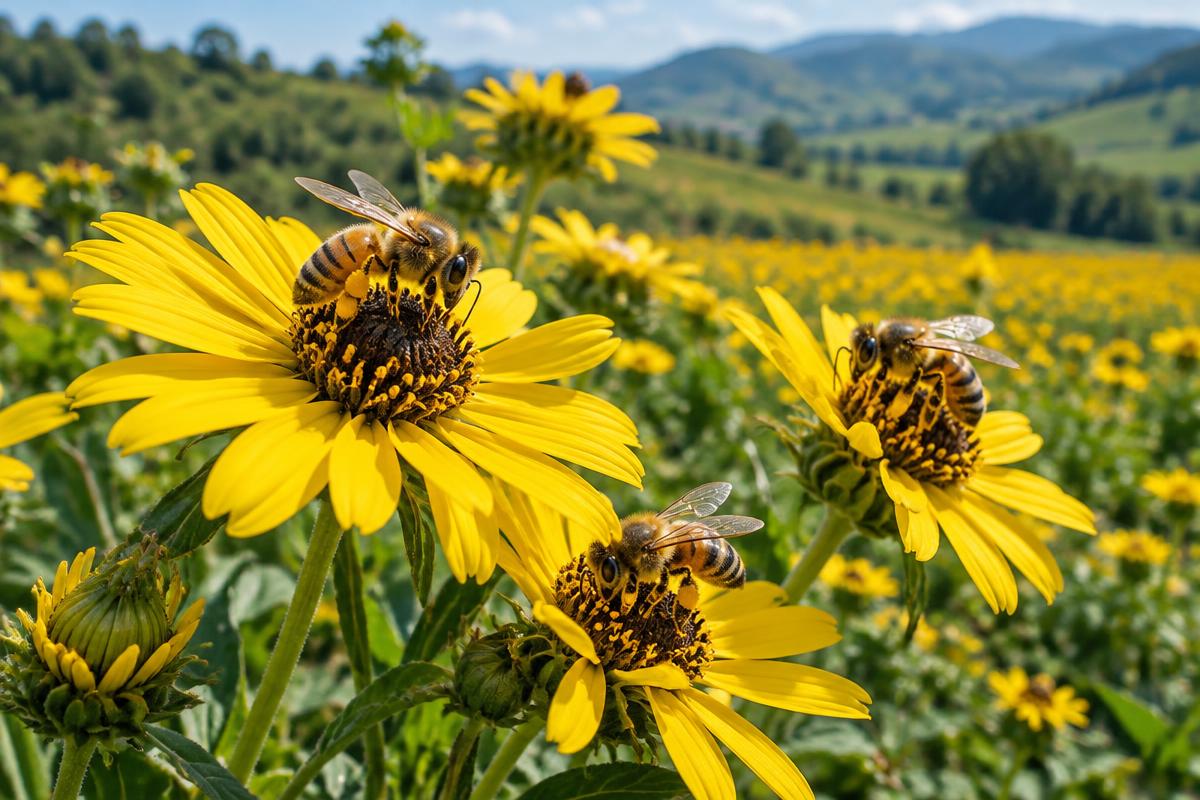
Bees benefit from a succession of flowering trees, shrubs, herbs, crops and wild plants throughout the year. In Jimma Zone alone, a 2023 study identified 141 pollen and/or nectar-source honeybee plant species belonging to 62 plant families — and two major flowering periods associated with honey-flow seasons.
Our approach is to understand each site as a floral landscape, rather than simply as a parcel of land — and to document what actually flowers at each site rather than relying on assumptions.
Sidama
Agroforestry crops and garden forage.
Cultivated landscape
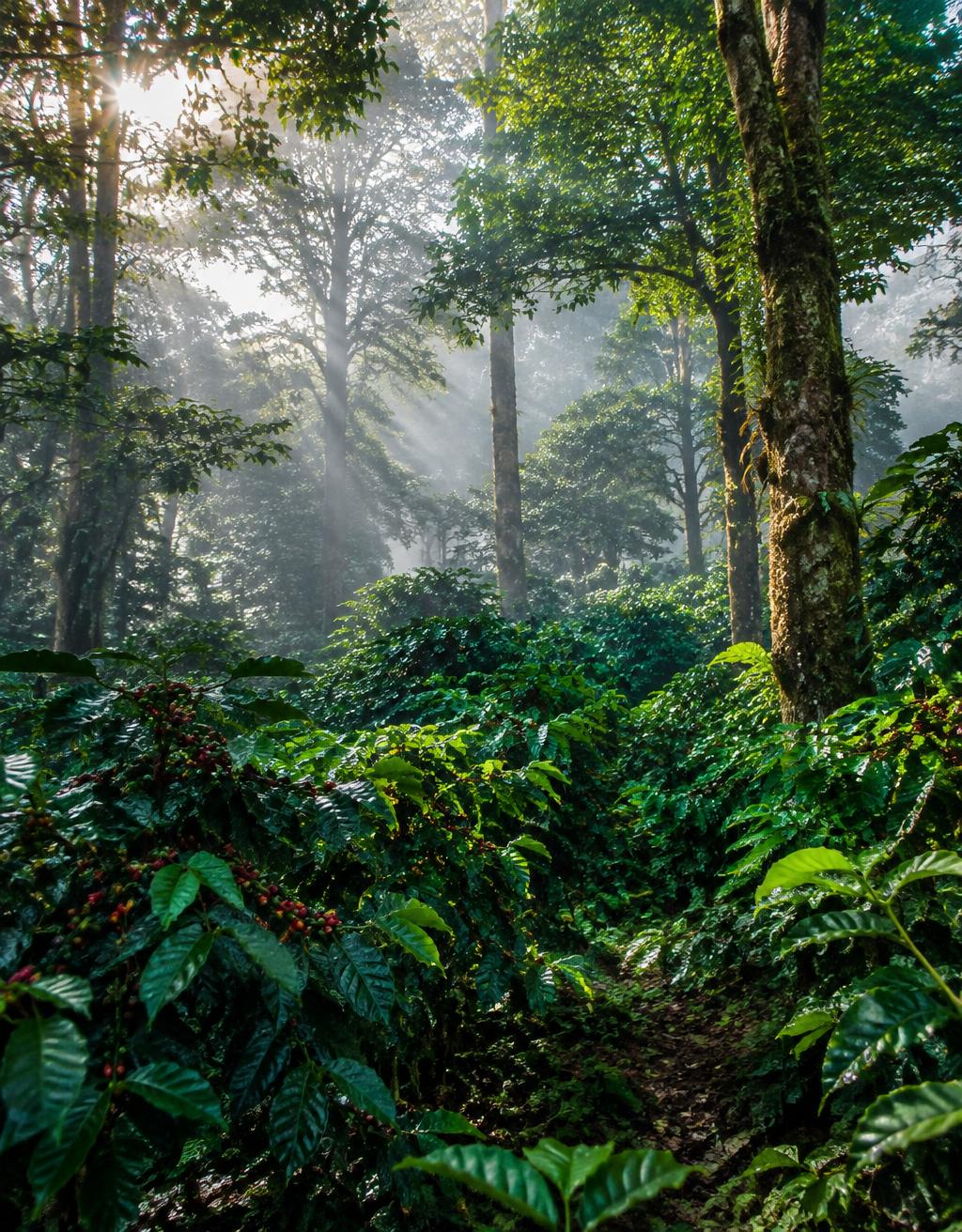
Agriculture in Sidama is strongly associated with agroforestry systems in which coffee and enset are anchor components, alongside:
- Coffee
- Enset
- Maize
- Barley
- Wheat
- Oats
- Sorghum
- Millet
- Sugar cane
- Potatoes & vegetables
Documented regional forage
Research on Sidama has documented bee forage including:
- Eucalyptus
- Coffee (Coffea arabica)
- Guizotia
- Vernonia
- Acacia
- Brassica
- Clover
- Other regional plants
Flowering and honey-flow periods vary by location and season. The exact flora of each of our sites will be confirmed through field documentation.
Oromia
Coffee-forest ecosystems of the southwest.
Southwestern Ethiopia contains some of the world's most important natural habitats for wild Arabica coffee. Coffee forests are complex ecosystems in which coffee grows beneath and among indigenous trees, shrubs, climbers and herbaceous plants. Research in West Hararghe, for comparison, identified 48 bee-plant species across three altitude zones of a single forest — illustrating how strongly vegetation can vary even within one area.
Bee-flora species in Gera
30 tree species, 21 shrub species and 9 woody liana species documented by research in Gera Forest.
Honeybee plant species in Jimma Zone
Across 62 plant families, identified by a 2023 study — with two major flowering periods tied to honey-flow seasons.
Forest species at our Bedelle site
Including Coffea arabica, Cordia africana, Croton macrostachyus, Erythrina brucei, Pouteria adolfi-friederici and Syzygium guineense.
The floral calendar
Understanding when the landscape feeds the bees.
One of the most important elements of our project will be the development of a site-specific floral calendar — recording plants, bee activity, pollen, nectar and honey flow for every site. It will be built through observation, not assumption.
| Period | Flowering plants | Bee activity | Pollen | Nectar | Honey flow |
|---|---|---|---|---|---|
| Early season | To be documented | To be monitored | ✓ | ✓ | To be assessed |
| Main flowering | To be documented | To be monitored | ✓ | ✓ | To be assessed |
| Late season | To be documented | To be monitored | ✓ | ✓ | To be assessed |
| Dry / low-flow period | To be documented | To be monitored | — | — | To be assessed |
Status as of project start — the calendar will be filled progressively as field documentation advances.
Every site has a different floral combination — and therefore the potential to produce a different honey.
Meet the six sites